
What Are the Signs of Ovulation? 10 Common Symptoms You Should Know
What Are the Signs of Ovulation? 10 Common Symptoms You Should Know
What Are the Signs of Ovulation?
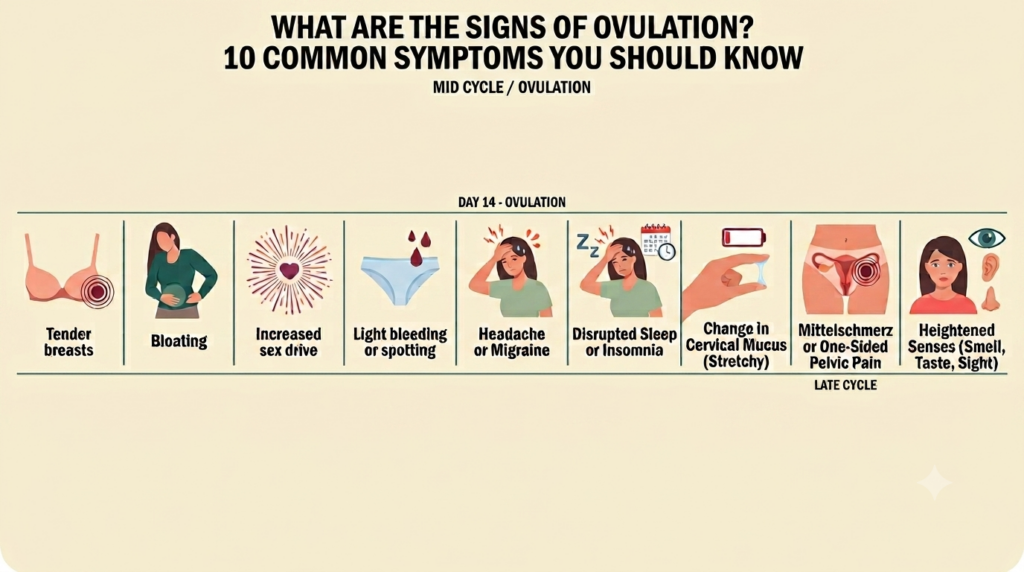
Knowing the signs of ovulation can help you understand your menstrual cycle and identify your most fertile days. Ovulation usually occurs about 12–16 days before your next period, when one of your ovaries releases a mature egg. During this time, hormone levels change, causing physical and emotional symptoms that many women notice.
Some women experience several ovulation symptoms each month, while others may have very few or none at all. Learning to recognise these natural changes can be helpful whether you are trying to conceive, avoiding pregnancy using fertility awareness methods, or simply tracking your reproductive health.
Common Signs of Ovulation
Here are the most common symptoms that may indicate ovulation is approaching or has just occurred.
1. Changes in Cervical Mucus
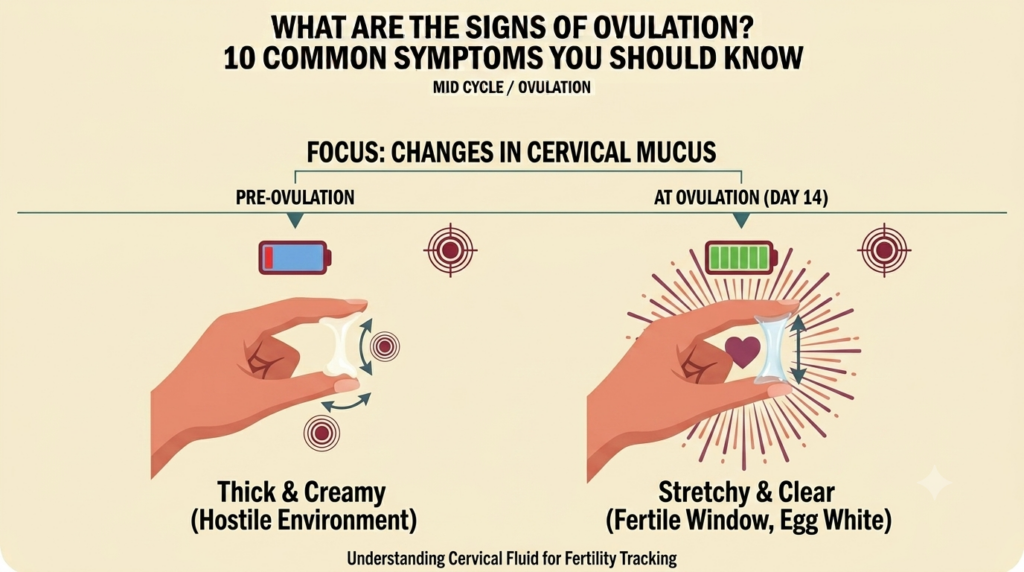
One of the most reliable signs of ovulation is a change in cervical mucus. Around ovulation, the mucus becomes:
- Clear
- Slippery
- Stretchy
- Similar to raw egg whites
This type of mucus helps sperm travel more easily toward the egg, increasing the chances of pregnancy.
2. Mild One-Sided Pelvic Pain (Ovulation Pain)
Some women experience mild pain or cramping on one side of the lower abdomen during ovulation. This is known as Mittelschmerz, a German word meaning “middle pain”.
The discomfort usually
- Lasts a few minutes to several hours
- Occurs on either the left or right side
- Changes sides from month to month
3. Breast Tenderness
Hormonal changes after ovulation may cause:
- Mild breast tenderness
- Swelling
- Increased sensitivity
These symptoms are generally temporary and disappear before your next period.
4. Temporary Bloating
Many women notice slight abdominal bloating during ovulation due to hormonal fluctuations and mild fluid retention. This symptom usually lasts only a day or two.
5. Light Spotting
A small number of women experience very light spotting or pink discharge around ovulation. This occurs because of temporary hormonal changes and is usually not a cause for concern.
6. Changes in the Cervix
As ovulation approaches, the cervix often becomes the following:
- Softer
- Higher in the vagina
- Slightly open
- More moist
Women who regularly track fertility may notice these changes through self-examination.
7. Increased Sex Drive
Many women naturally experience a higher libido during ovulation. Rising oestrogen levels help increase sexual desire during the fertile window, which may improve the chances of conception.
8. Sharper Sense of Smell or Taste
Some women report heightened senses during ovulation, including:
- Better sense of smell
- Increased sensitivity to taste
- Greater awareness of certain scents
These changes are believed to result from hormonal fluctuations.
9. Mood Changes
Hormone levels can also affect emotions. Around ovulation, some women experience:
- Increased energy
- Improved mood
- Emotional sensitivity
- Mild mood swings
These changes are usually temporary.
10. Appetite Changes
Some women notice short-term changes in appetite during ovulation. You may feel slightly hungrier or crave certain foods due to hormonal shifts.
Which Sign of Ovulation Is Most Accurate?
Although every symptom can be helpful, the most reliable signs include:
- Egg white cervical mucus
- Positive ovulation predictor kit (LH surge)
- Basal body temperature tracking
- Ovulation confirmed by ultrasound (medical setting)
Using more than one method provides the most accurate prediction of your fertile window.
When Do Ovulation Symptoms Begin?
Ovulation symptoms usually appear 1–3 days before ovulation and may continue for 24–48 hours afterwards.
For women with a regular 28-day menstrual cycle, ovulation commonly occurs around day 14, although this varies from person to person.
Can You Ovulate Without Symptoms?
Yes. Many healthy women ovulate without noticeable symptoms. The absence of ovulation signs does not necessarily mean you are not releasing an egg.
If you are trying to conceive and are unsure whether you are ovulating, consider using:
- Ovulation predictor kits (OPKs)
- Basal body temperature (BBT) tracking
- Ovulation calculators
- Fertility monitoring apps
When Should You See a Doctor?
Consult a healthcare provider if you experience:
- Severe pelvic pain during ovulation
- Heavy bleeding between periods
- Irregular menstrual cycles
- No signs of ovulation for several months
- Difficulty becoming pregnant after 12 months of trying (or 6 months if over age 35)
A medical evaluation can help identify underlying conditions such as PCOS, thyroid disorders, or hormonal imbalances.
Frequently Asked Questions
What are the first signs of ovulation?
The earliest signs often include clear, stretchy cervical mucus, mild pelvic pain, increased libido, and changes in cervical position.
How many days do ovulation symptoms last?
Most ovulation symptoms last between one and three days, although this varies among women.
Is cramping a sign of ovulation?
Yes. Mild one-sided pelvic pain, called Mittelschmerz, is a common ovulation symptom.
Can I get pregnant if I notice ovulation signs?
Yes. Ovulation symptoms usually occur during your most fertile days, making pregnancy more likely if you have unprotected intercourse.
Does every woman experience ovulation symptoms?
No. Some women notice several signs each month, while others experience few or no obvious symptoms.
Conclusion
Recognising the signs of ovulation can help you better understand your menstrual cycle and identify your fertile window. While symptoms such as egg white cervical mucus, mild pelvic pain, breast tenderness, bloating, spotting, and increased libido are common, every woman’s experience is unique. Tracking these signs alongside ovulation tests or basal body temperature can improve accuracy when planning or avoiding pregnancy. If your cycles are irregular or you suspect ovulation problems, speak with a healthcare professional for personalised advice.
Related Articles
- Anovulation Causes and Treatment
- What Is Ovulation?
- Fertile Window
- Best Time to Get Pregnant
- How to Track Ovulation at Home
- Ovulation with Irregular Periods
- LH Surge Explained
- Ovulation Pain (Mittelschmerz)
References
- Vigil P, Lyon C, Flores B, Rioseco H, Serrano F. Ovulation, a sign of health. The Linacre Quarterly. 2017 Nov;84(4):343-55.
- Holesh, Julie E., Autumn N. Bass, and Megan Lord. “Physiology, ovulation.” (2017).
- What are the signs and symptoms?, https://my.clevelandclinic.org/health/articles/23439-ovulation.
- Holesh JE, Bass AN, Lord M. Physiology, Ovulation (https://pubmed.ncbi.nlm.nih.gov/28723025/). 2023 May 1. In: StatPearls. Treasure Island (FL): StatPearls Publishing. Accessed 3/13/2026.
SEO Title (H1)
What Are the Signs of Ovulation? 10 Common Symptoms You Should Know
URL Slug
/signs-of-ovulation/
Focus Keyword
Signs of Ovulation
SEO Title (≤60 Characters)
What Are the Signs of Ovulation? | Symptoms & Fertility
Meta Description (150–160 Characters)
Learn the most common signs of ovulation, including cervical mucus changes, mild cramps, breast tenderness, bloating, and increased libido to identify your fertile window.