
Best Foods for Period Pain Relief: What to Eat and Avoid
The best foods for period pain relief are rich in omega-3 fats, magnesium and anti-inflammatory compounds. This guide shows which foods and drinks may ease cramps, which to limit, and how to plan your meals around your cycle.
Food will not replace pain relief medicine for everyone, but what you eat can change how strong your cramps feel. Many people notice that eating more anti-inflammatory foods, drinking enough water and cutting back on salty or sugary snacks makes their periods easier to handle.
Below you will find the foods with the most support, a simple table of nutrients, what to avoid and a plan you can follow across your cycle. Use the Period Calculator or the Ovulation Calculator to find your dates, and read why period cramps happen if you want the science behind the pain.
Key Takeaways
- Food can support period pain relief, but it works best alongside heat, rest, movement and medicine when needed.
- Omega-3 fats, magnesium and ginger have the most research behind them for menstrual pain.
- Start eating these foods 3 to 5 days before your period and keep them up for several cycles.
- Limit ultra-processed foods, added sugar, heavy caffeine, alcohol and very salty snacks if they worsen your symptoms.
- Severe, sudden or worsening pain needs a doctor, not just a diet change.
Can Diet Help Ease Period Pain?
Yes, for many people, but the effect is usually modest and builds over time. Cramps come from prostaglandins, hormone-like chemicals that make the uterus contract. Higher levels mean stronger contractions and more pain. Some foods and nutrients are linked to lower inflammation and to calmer muscles, which is why they may take the edge off.
Research is strongest for omega-3 fats and ginger, and mixed for most vitamins and minerals. Treat food as one part of your plan, not a cure.
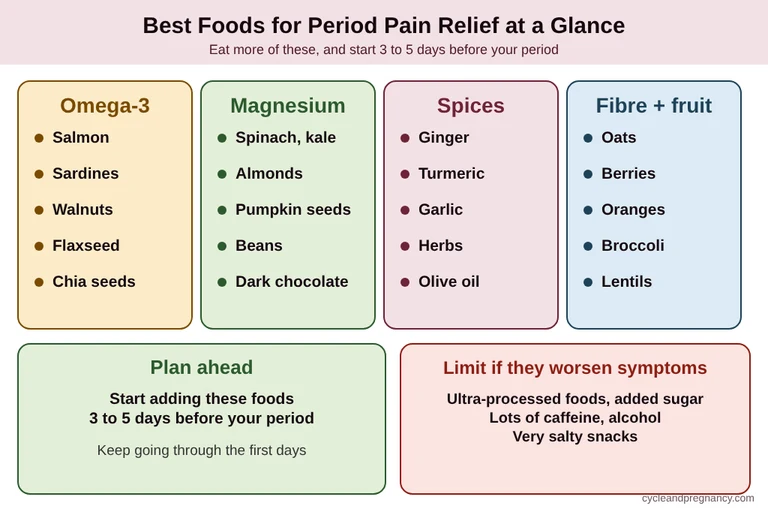
Quick answer: eat oily fish or plant omega-3 sources, leafy greens, nuts and seeds, ginger, berries and whole grains most days, and drink enough water.
Key Nutrients That May Ease Cramps
These are the nutrients most often linked to less menstrual pain. Food sources are the safest place to start, and supplements are best checked with a pharmacist or doctor first.
| Nutrient | Why it may help | Good food sources | Evidence |
|---|---|---|---|
| Omega-3 fats | Lower inflammation and prostaglandin activity | Salmon, sardines, mackerel, walnuts, flaxseed, chia | Moderate |
| Magnesium | Helps muscles relax | Spinach, almonds, pumpkin seeds, beans, dark chocolate | Mixed |
| Calcium and vitamin D | Support muscle function | Dairy or fortified alternatives, tofu, sardines, sunlight | Some |
| Fibre | Supports gut health and hormone balance | Oats, lentils, beans, berries, vegetables | Some |
| Vitamin E | Antioxidant that may lessen pain in some trials | Nuts, seeds, olive oil, avocado | Limited |
| Water | Eases bloating and supports comfort | Water, soups, cucumber, watermelon | Supportive |
For the official numbers, see the NIH fact sheet on magnesium and the NIH fact sheet on omega-3 fatty acids. If you want a wider view of eating across your cycle, read about nutrition during menstruation.
Best Foods for Period Pain Relief
Start with a few of these and build up. You do not need all of them.
Oily Fish: Salmon, Sardines, Mackerel and Anchovies
These are the richest sources of the omega-3 fats EPA and DHA. Reviews of trials have found that omega-3 supplements, often taken for two to three months, can reduce period pain and the need for pain relievers. Aim for two to three servings of oily fish a week. If you do not eat fish, try walnuts, flaxseed and chia seeds, although plant omega-3 is used less efficiently by the body.
Leafy Greens: Spinach, Kale and Swiss Chard
Dark greens give you magnesium, which supports muscle relaxation, plus iron to replace what is lost in your period. Add a handful to eggs, soups, curries or smoothies.
Ginger
Ginger is one of the best-studied foods for cramps. A meta-analysis of trials found it can reduce pain intensity and duration in primary dysmenorrhea, with studies using about 750 to 2,000 mg of ginger powder a day for the first 3 to 4 days of the period. Fresh ginger tea is an easy start. Large amounts can upset the stomach or interact with blood thinners, so ask a doctor before using supplements.
Turmeric, Garlic and Other Herbs and Spices
Turmeric contains curcumin, an anti-inflammatory compound, and absorbs better when eaten with black pepper and a little fat. Garlic, cinnamon and other herbs add flavour and antioxidants. The evidence for these in period pain is smaller than for ginger, so think of them as helpful extras.
Berries and Oranges
Strawberries, blueberries, raspberries and oranges supply vitamin C and antioxidants, and vitamin C helps you absorb iron from plant foods. They also make a good sweet snack that is lower in added sugar.
Nuts and Seeds: Almonds, Walnuts, Pumpkin, Flax and Chia
A small handful gives magnesium, vitamin E, healthy fats and fibre. Ground flaxseed and chia can be stirred into oats or yoghurt.
Whole Grains and Oats
Oats, brown rice and quinoa give steady energy and fibre, which helps avoid the energy dips and cravings that can make cramps feel worse.
Beans, Lentils and Chickpeas
These add fibre, magnesium and plant protein. They are filling, cheap and easy to add to soups and salads.
Extra Virgin Olive Oil and Avocado
Both provide healthy fats and vitamin E. Using olive oil instead of refined or fried cooking fats is a simple swap.
Dark Chocolate (70% Cocoa or Higher)
In small amounts, dark chocolate provides magnesium and antioxidants and can lift mood. Pick a low-sugar bar and keep to a square or two.
Broccoli and Other Cruciferous Vegetables
Broccoli, cauliflower and cabbage add fibre and plant compounds. Steam lightly to keep their nutrients.
Pineapple, Bananas and Tomatoes
These do not have strong trial evidence for cramps, but they are hydrating or rich in potassium and vitamin C, and many people find them gentle on the stomach.
Foods and Drinks to Limit or Avoid
You do not have to cut these out completely. Try reducing them in the days before and during your period and see whether your symptoms change.
- Ultra-processed foods and added sugar: they can cause energy swings and may add to inflammation.
- Lots of caffeine: large amounts can raise tension and worsen breast tenderness or sleep problems for some people.
- Alcohol: it can dehydrate you, disturb sleep and worsen mood symptoms.
- Very salty snacks: salt makes the body hold on to water and can add to bloating.
- Red and processed meat: some studies link higher intake to more inflammation or menstrual pain, so eating less may help some people. This evidence is observational.
- Fried and fatty foods: these can feel heavy and may worsen nausea during cramps.
Bloating is a common companion to cramps, and our guide to period bloating causes and relief explains more.
What Causes Food Cravings During a Period?
Cravings are common in the days before and during a period. Hormone changes play a part: estrogen and progesterone shift across the cycle, and these changes can affect appetite, mood and the brain chemicals that control cravings. Many people also eat more in the luteal phase because the body burns slightly more energy at that time.
Sugar and chocolate cravings are the most reported. A balanced approach works better than going without. Combine protein, fibre and healthy fats at meals, keep fruit and nuts nearby, and allow a small portion of the food you crave so it does not turn into a binge.
Hydration and Soothing Drinks
Drinking enough water helps with bloating and headaches, and a few studies suggest warm drinks may ease cramps for some people. Good choices are:
- Plain water through the day, plus water-rich foods such as cucumber, watermelon and celery
- Warm ginger tea, sipped during the first days of your period
- Chamomile tea, which many people find relaxing in the evening
- Warm water or broth if you feel cold and crampy
Skip sugary drinks, and keep coffee and energy drinks modest.
Plan Ahead by Cycle Phase
Planning works better than reacting once the pain has started. Start adding omega-3, magnesium and ginger foods 3 to 5 days before your expected period, and keep going through the first days of bleeding. The Period Calculator gives you your dates, and our guide to the phases of the menstrual cycle explains what each stage does.
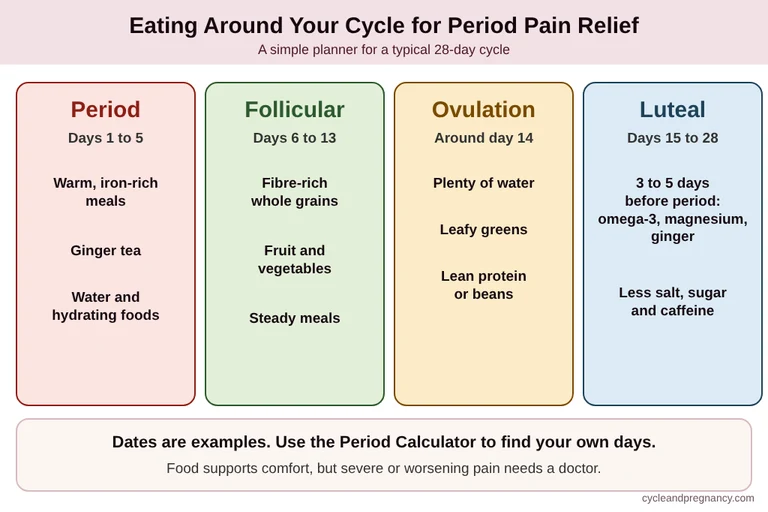
| Phase | Typical days | Food focus |
|---|---|---|
| Period | 1 to 5 | Warm, iron-rich meals, ginger tea, plenty of fluids |
| Follicular | 6 to 13 | Fibre-rich whole grains, fruit and vegetables |
| Ovulation | About 14 | Water, leafy greens and protein |
| Luteal | 15 to 28 | From 3 to 5 days before your period, omega-3 and magnesium foods; less salt, sugar and caffeine |
Sample One-Day Menu for Period Pain Relief
| Meal | Idea |
|---|---|
| Breakfast | Oats with chia seeds, berries and a spoon of ground flaxseed |
| Lunch | Salmon or chickpea salad with leafy greens, avocado and olive oil |
| Snack | A handful of walnuts, or a banana with almond butter |
| Dinner | Ginger and turmeric vegetable stir-fry with lentils and brown rice |
| Drink | Fresh ginger tea, and water through the day |
| Treat | One or two squares of dark chocolate |
Habits That Boost Food-Based Relief
- Apply a heating pad or warm compress to the lower abdomen.
- Keep moving gently. See exercise and your menstrual cycle for ideas.
- Protect your sleep, because poor sleep can raise pain sensitivity.
- Use breathing exercises or short breaks to manage stress.
- Track your pain and what you ate for 2 to 3 cycles to see what really helps.
When to See a Doctor
Food changes help mild to moderate cramps, but they are not enough for everyone. See a doctor if the pain is severe, getting worse, starts later in life, comes with heavy bleeding or pain between periods, or does not respond to usual treatment.
These signs can point to conditions such as endometriosis or fibroids, which need proper treatment, as the American College of Obstetricians and Gynecologists (ACOG) explains. Heavy bleeding can also lower iron, so read about heavy periods too. Talk to a pharmacist or doctor before starting supplements, especially if you are pregnant, planning pregnancy or take other medicines.
Frequently Asked Questions
What are the best foods for period pain relief?
Does ginger really help with menstrual cramps?
How can I reduce period cramps naturally without medication?
What should I eat before my period to reduce cramps?
Are there foods that make period cramps worse?
Can diet alone stop severe period pain?
How long does it take for foods to help period pain?
Is dark chocolate good for period cramps?
Final Thoughts
Cramps are common, and a steady routine can make them easier to live with. Eating omega-3 and magnesium foods, ginger, fibre-rich meals and plenty of water, while easing off ultra-processed foods, caffeine, alcohol and salt, is a practical plan you can follow every cycle.
If the pain is severe, lasts longer than usual or interferes with daily life, see a healthcare professional for a proper check and more treatment options.


Sources & References
- American College of Obstetricians and Gynecologists. Dysmenorrhea: Painful Periods. acog.org
- National Institutes of Health, Office of Dietary Supplements. Magnesium Fact Sheet for Health Professionals. ods.od.nih.gov
- National Institutes of Health, Office of Dietary Supplements. Omega-3 Fatty Acids Fact Sheet for Health Professionals. ods.od.nih.gov
- National Institutes of Health, Office of Dietary Supplements. Calcium Fact Sheet for Health Professionals.
- Proctor ML, Murphy PA. Herbal and Dietary Therapies for Primary and Secondary Dysmenorrhoea. Cochrane Database of Systematic Reviews. 2001.
- Moshfeghinia R, et al. Ginger for Pain Management in Primary Dysmenorrhea: A Systematic Review and Meta-Analysis. Journal of Integrative and Complementary Medicine. 2024.
- Rahbar N, Asgharzadeh N, Ghorbani R. Effect of Omega-3 Fatty Acids on Intensity of Primary Dysmenorrhea. International Journal of Gynecology & Obstetrics. 2012.
- Abdi F, et al. Role of Vitamin D and Calcium in the Relief of Primary Dysmenorrhea: A Systematic Review. Obstetrics & Gynecology Science. 2021.
- Najafi N, et al. Major Dietary Patterns in Relation to Menstrual Pain: A Nested Case Control Study. BMC Women’s Health. 2018.
- Naraoka Y, et al. Severity of Menstrual Pain Is Associated with Nutritional Intake and Lifestyle Habits. Healthcare (Basel). 2023.
- Torkan B, et al. The Role of Water Intake in the Severity of Pain and Menstrual Distress Among Females Suffering from Primary Dysmenorrhea. BMC Women’s Health. 2021.
- Barnard ND, Scialli AR, Hurlock D, Bertron P. Diet and sex-hormone binding globulin, dysmenorrhea, and premenstrual symptoms. Obstetrics & Gynecology. 2000;95:245-250.
- Proctor M, Farquhar C. Diagnosis and management of dysmenorrhoea. BMJ. 2006;332:1134-1138.