
PMS vs PMDD Key Differences, Symptoms and Treatment Explained
Many people notice mood swings or irritability in the days before their period, that’s usually PMS. For some, the emotional symptoms become intense enough to disrupt work, relationships, and daily life. This is PMDD, a distinct, clinically recognized condition. Here’s how to tell them apart, and what actually helps.
Many people experience mood swings, irritability, or low energy in the days or weeks before their period. These changes are often called premenstrual syndrome (PMS). For some, the emotional symptoms become so intense they disrupt work, relationships, and daily life, this more severe form is known as premenstrual dysphoric disorder (PMDD).
Understanding PMS vs PMDD, and the difference between them, helps you get the right support and treatment.
Key Takeaways
- PMS vs PMDD: PMS is mild to moderate and common, while PMDD is severe and affects far fewer people.
- PMDD has strict DSM-5 criteria: at least five symptoms, including one core mood symptom.
- Symptoms appear in the luteal phase and ease soon after your period starts.
- Diagnosis needs symptom tracking for at least two cycles.
- Seek help promptly for extreme mood symptoms or any thoughts of self-harm.
Quick Comparison: PMS vs PMDD
PMS is very common and usually manageable. PMDD affects far fewer people but is severe and treatable.
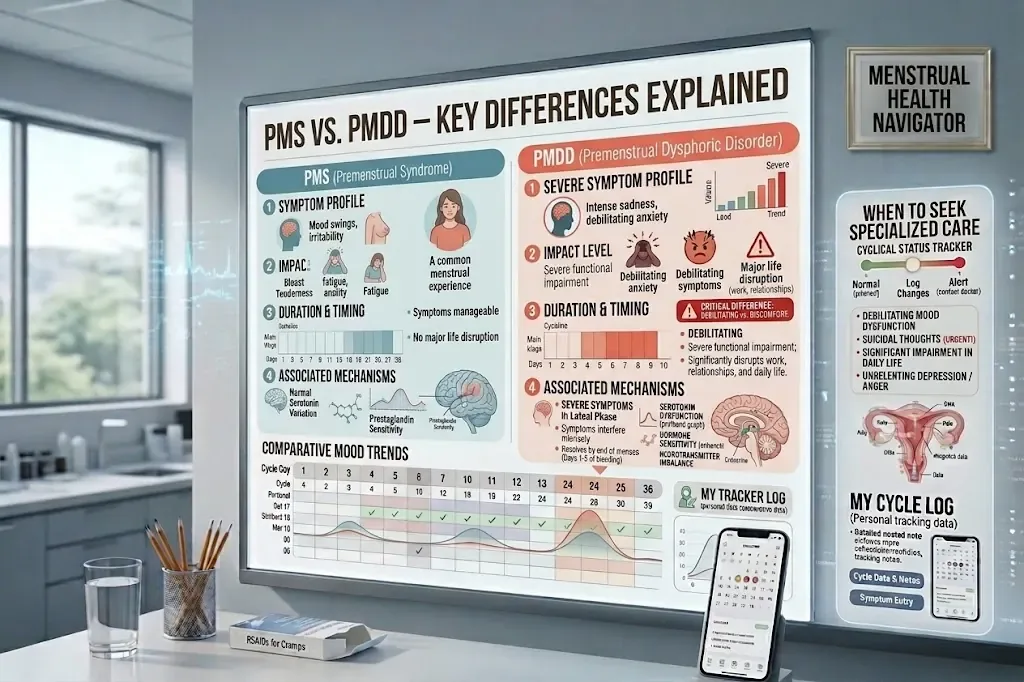
Side by Side
| Feature | PMS | PMDD |
|---|---|---|
| Prevalence | Up to about 75% of menstruating people | 3 to 8% of menstruating people |
| Severity | Mild to moderate | Severe and often disabling |
| Main focus | Physical plus mild emotional symptoms | Severe emotional and mood symptoms |
| Impact on daily life | Usually manageable | Significantly interferes with work, school or relationships |
| Core emotional symptoms | Mild irritability or moodiness | Marked depression, anxiety, anger or hopelessness |
| Diagnosis | Clinical pattern | Strict DSM-5 criteria (at least 5 symptoms) |
What Is PMS?
PMS is a group of physical and emotional symptoms in the luteal phase that ease once your period starts.
Common PMS Symptoms
Premenstrual syndrome (PMS) refers to a group of physical, emotional, and behavioral symptoms that appear in the luteal phase, after ovulation, typically 1 to 2 weeks before the period, and improve once menstruation begins.
- Bloating and breast tenderness
- Fatigue and sleep changes
- Headaches or muscle aches
- Food cravings
- Mild irritability, anxiety, or low mood
- Difficulty concentrating
Managing PMS
Most people with PMS can manage symptoms with lifestyle changes and continue normal activities. If cramps come along with other symptoms, our guide to why period cramps happen and what helps and our list of the best foods for period pain relief are good places to start.
What Is PMDD?
PMDD is a severe, clinically recognized mood disorder linked to the menstrual cycle, with at least one core emotional symptom.
How PMDD Is Classified
Premenstrual dysphoric disorder (PMDD) is a severe, clinically recognized mood disorder linked to the menstrual cycle. It was formally recognized as an official psychiatric diagnosis in 2013 and is listed in the DSM-5 as a depressive disorder. Symptoms are intense enough to cause significant distress or impairment.
Core Emotional Symptoms
In addition to physical symptoms similar to PMS, PMDD features at least one core emotional symptom such as:
- Marked depressed mood or feelings of hopelessness
- Intense anxiety, tension, or feeling “on edge”
- Extreme mood swings or sudden sadness
- Marked irritability, anger, or increased conflicts
- Feeling overwhelmed or out of control
Other Possible Symptoms
Other possible symptoms include loss of interest in usual activities, difficulty concentrating, severe fatigue, changes in appetite or sleep, and physical symptoms like bloating or joint pain.
Ovulation and the Luteal Phase: Why PMDD Timing Matters
Symptoms begin after ovulation, in the luteal phase, and usually fade within a few days of your period starting.
Two Phases to Know
Ovulation is the moment an ovary releases an egg, roughly halfway through the cycle. The luteal phase is the stretch between ovulation and the first day of bleeding, usually about 12 to 14 days.
| Stage | What happens | Rough timing |
|---|---|---|
| Ovulation | An egg is released from the ovary | Around day 14 |
| Luteal phase | Progesterone rises to prepare for a possible pregnancy, then falls if there is none | About days 15 to 28 |
| Period | Hormone levels drop and bleeding starts | Day 1 of the next cycle |
Why This Matters for PMDD
In PMDD, the mood symptoms follow this rise and fall of hormones. They show up after ovulation and ease within a few days of bleeding starting, then tend to return in a similar pattern each cycle. Think of ovulation as the event and the luteal phase as the stretch that follows it. Our guide to the menstrual cycle phases explains each stage in more detail. You can also read our luteal phase explained guide, and learn the signs of ovulation to see when this phase begins.
Key Differences Between PMS and PMDD
PMDD differs from PMS in severity, emotional intensity, diagnostic criteria and treatment.
Here’s a closer look at what separates PMS and PMDD across four key areas.
Severity and Impact
PMS symptoms are uncomfortable but rarely stop someone from functioning. PMDD symptoms are intense and can damage relationships, reduce productivity, or lead to social withdrawal. Clinically, this is often described as “marked interference with functioning”, the diagnostic threshold that separates PMDD from even severe PMS.
Emotional Intensity
Mild moodiness is common in PMS. In PMDD, emotional changes can include severe depression, panic-like anxiety, rage, or in some cases, suicidal thoughts.
Diagnostic Criteria
PMS is diagnosed based on a recurring cyclical pattern. PMDD requires specific criteria: at least five symptoms (one must be a core mood symptom) that occur in most cycles, begin in the luteal phase, and resolve shortly after the period starts.
Treatment Approach
Lifestyle changes often suffice for PMS. PMDD frequently needs medical treatment such as SSRIs, hormonal therapy, or specialized care.
Mood, Brain Chemistry and Daily Life Compared
The two conditions differ in mood severity, how the brain reacts to hormones, how long symptoms last and how much they disrupt life.
Six More Differences
| Area | PMS | PMDD |
|---|---|---|
| Emotional symptoms | Mild moodiness, irritability or sadness that you can cope with | Severe mood changes such as rage, panic, deep sadness or hopelessness, and sometimes thoughts of suicide |
| Underlying cause | Hormone shifts that most people tolerate | An unusually strong brain response to normal hormone changes (serotonin and GABA signalling), not abnormal hormone levels |
| How long symptoms last | Several days before a period | Often one to two weeks of the luteal phase |
| When symptoms ease | Fade once bleeding begins | Ease within a few days of bleeding, then return in a similar pattern each cycle |
| Daily life | Inconvenient, rarely disruptive | Can mean missed work or school, relationship conflict, social withdrawal and lost income |
| Safety risk | Low | Can include suicidal thoughts, so it needs medical attention |
PMS vs PMDD Symptoms: Physical, Emotional and Behavioral
Both can cause physical symptoms. The clearest gap is in emotional and behavioral symptoms, which are mild in PMS and severe in PMDD.
Symptoms Side by Side
| Symptom type | PMS | PMDD |
|---|---|---|
| Physical | Bloating, breast tenderness, headaches, aches, tiredness | Similar physical symptoms, often with joint pain and severe fatigue |
| Emotional | Mild irritability, low mood or tearfulness | Marked sadness or hopelessness, intense anxiety or tension, anger, feeling overwhelmed |
| Behavioral | Food cravings, sleep changes | Big appetite or sleep changes, withdrawing from others, trouble concentrating, losing interest in usual activities |
The Key Clue
Many physical symptoms overlap, so the emotional symptoms and how much they affect daily life are what point toward PMDD.
Causes and Why Mood Changes Happen
Both conditions follow normal luteal phase hormone shifts. In PMDD the brain reacts more strongly to them.
The Hormone Link
Both conditions are linked to normal hormonal fluctuations in the luteal phase: rising then falling progesterone and estrogen. The difference lies in how the brain responds.
How the Brain Responds
Research suggests people with PMDD may have heightened sensitivity to these hormone changes, particularly involving serotonin and a progesterone metabolite called allopregnanolone (ALLO), which acts on GABA-A receptors in the brain. Hormone levels themselves are usually normal. The issue is the brain’s reaction to them, not abnormal hormone production. Underlying anxiety or depression can also make symptoms worse in both conditions.
Factors That May Raise the Risk
Researchers have linked these factors with more severe premenstrual symptoms, although they do not explain every case:
- A personal or family history of depression, anxiety or postpartum depression
- A family history of PMS or PMDD
- High stress or a history of trauma
How Doctors Diagnose PMS vs PMDD
There is no single test. Doctors rely on symptom tracking over at least two cycles and DSM-5 criteria for PMDD.
Track Your Symptoms
There’s no single blood test for either condition. Diagnosis relies on careful tracking:
- Record symptoms daily for at least two full menstrual cycles.
- Note timing relative to ovulation and the start of your period.
- Rate severity and impact on daily life.
Ruling Out Other Conditions
Your doctor may also rule out other conditions (thyroid issues, depression, anxiety disorders) and use DSM-5 criteria for PMDD. Our Period Calculator can help you see where you are in your cycle when you log symptoms.
Why PMDD Is Often Misdiagnosed
Severe mood symptoms can look like other conditions. A two-cycle diary shows whether they follow your cycle.
Conditions It Gets Mistaken For
Because the mood symptoms can be intense, PMDD is sometimes mistaken for other conditions when symptoms are judged at a single point in time:
- Bipolar disorder
- Major depression
- Anxiety disorders
How a Diary Helps
Rating your symptoms daily for at least two cycles shows whether they appear only after ovulation and ease after your period starts. A symptom diary or app, such as the Daily Record of Severity of Problems (DRSP), makes this pattern easier to see. A clinician can then tell PMDD apart from other conditions, or find that both are present.
Treatment Options
Lifestyle changes often suffice for PMS. PMDD frequently needs SSRIs, hormonal options, therapy or specialist care.
Treatment for PMS and PMDD looks quite different, matching the difference in severity between the two conditions.
For PMS
Regular exercise, a balanced diet, and good sleep; stress management and calcium supplementation (about 1,200 mg daily); over-the-counter pain relief for physical symptoms.
For PMDD
Selective serotonin reuptake inhibitors (SSRIs) are often first-line, taken either daily or only in the luteal phase. Combined hormonal birth control (especially continuous or short hormone-free interval regimens), cognitive behavioral therapy (CBT), and in some cases other hormonal treatments under specialist care can also help.
Lifestyle measures remain important alongside medical treatment for both conditions.
Treatment Options at a Glance
| Option | Used for | Notes |
|---|---|---|
| Lifestyle and over-the-counter remedies | PMS and mild symptoms | Exercise, balanced diet, sleep, stress management and pain relief |
| SSRIs | PMDD, often first-line | Taken daily or only in the luteal phase |
| Hormonal birth control | Some people with PMDD | Continuous or short hormone-free interval regimens are often used |
| GnRH agonists | Severe PMDD not helped by other treatments | Specialist care; these medicines stop ovulation and cause a temporary menopause-like state |
| Surgery | Rare, severe PMDD | Considered only as a last resort after other options, under specialist care |
Self-Care Tips for PMS and PMDD
Tracking, exercise, sleep and steady meals can ease PMS. For PMDD, self-care supports medical treatment but does not replace it.
Everyday Habits That May Help
| Tip | How it may help |
|---|---|
| Track symptoms daily | Shows your pattern and gives your doctor clear information |
| Move regularly | Exercise may ease mood and low energy |
| Keep a steady sleep routine | Poor sleep can make irritability and fatigue worse |
| Eat regular, balanced meals | Steady meals may reduce cravings and energy dips |
| Limit caffeine, alcohol and very salty foods | These can worsen anxiety, sleep and bloating for some people |
| Use stress relief | Breathing exercises, yoga or therapy may lower tension |
What Self-Care Cannot Replace
Supplements such as calcium or vitamin B6 should be discussed with a healthcare provider first. If symptoms are severe, self-care is a helpful addition, not a substitute for medical treatment. Stress also changes cycles, so see how stress affects your period for more.
When to See a Doctor
See a doctor if mood symptoms feel extreme, disrupt daily life, or include thoughts of self-harm.
Signs to Get Help
Seek professional help for premenstrual symptoms if:
- Mood symptoms feel extreme or out of character
- Symptoms interfere with work, school, or relationships
- You experience thoughts of self-harm or suicide
- Symptoms don’t improve with basic lifestyle changes
- You’re unsure whether it’s PMS or PMDD
If You Feel Unsafe
If thoughts of self-harm feel urgent, the 988 Suicide & Crisis Lifeline (call or text 988 in the US) is available 24/7. Outside the US, contact your local emergency number or crisis service.
This article is general information, not a diagnosis. A healthcare provider can assess your symptoms. If your period is also late, read why your period may be late.
Final Thoughts
Mild PMS is common and manageable. PMDD is less common, more serious and treatable.
The Spectrum
When it comes to PMS vs PMDD, period-related mood changes exist on a spectrum. Mild PMS is very common and usually manageable. PMDD is less common but more serious and treatable. Tracking your symptoms and talking openly with a healthcare provider are the most effective first steps toward relief and a better quality of life. For background, see what a period is and what a normal menstrual cycle looks like, or browse more guides in our period health section.