
Signs of Ovulation – 10 Symptoms You Should Know
Signs of ovulation are small changes in your body, from cervical mucus to mood, that can help you recognize your fertile window. Here are 10 common symptoms and how reliable each one is.
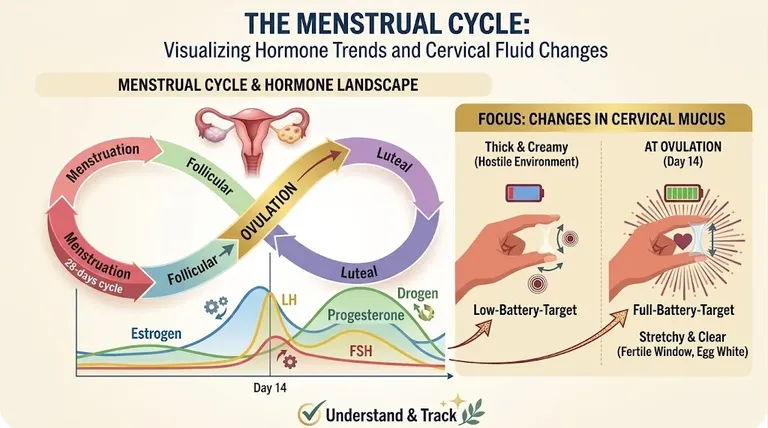
Ovulation is when an egg is released and your chances of getting pregnant are highest. Many people notice signs of ovulation as small body changes, some easy to spot and others subtle. A calculator such as our ovulation calculator or ovulation predictor kits can add useful clues, but neither can tell you the exact day.
Ovulation symptoms are different for everyone. Some women notice several every cycle; others barely notice anything, and that is completely normal. There is no “correct” number of symptoms you are supposed to feel, and your body does not run on a fixed schedule.
In this article, we walk through 10 common signs so you can get to know your own cycle a little better.
What Is Ovulation?
Ovulation is when a mature egg is released from one of your ovaries. Once released, the egg travels toward the uterus, where it may be fertilized if it meets sperm and you may become pregnant. It’s just one part of the broader menstrual cycle phases explained, which also include the menstrual, follicular, and luteal phases. You can read the same explanation from Cleveland Clinic.
This process is controlled by hormones. In the days leading up to ovulation, hormone levels shift and rise, eventually triggering the release of the egg. These hormonal changes are also what cause many of the physical ovulation signs people associate with this part of the cycle.
It’s helpful to think in terms of a “fertile window” rather than a single day. This window usually includes the day of ovulation and a few days before it, since sperm can survive in the body for some time while waiting for an egg to be released.
A common myth is that ovulation always happens on day 14 of a cycle. In reality, this varies a lot from person to person, and even from month to month for the same person. Cycle length, stress, health conditions, and other factors can all shift the timing. So while day 14 might be a rough average for a 28-day cycle, plenty of women ovulate earlier or later than that, see our guide on when ovulation usually occurs for a closer look at the timing.
When Do You Ovulate?
Ovulation usually happens about 12 to 14 days before your next period, so the day depends on your cycle length. In a 28-day cycle that is around day 14, but shorter and longer cycles shift it. Our guide on how to calculate your ovulation day shows the steps.
How Long Does Ovulation Last?
The release of the egg is brief. Once released, the egg can be fertilized for about 12 to 24 hours, according to Cleveland Clinic. Ovulation signs such as slippery mucus can show up for several days around it.
Primary Signs of Ovulation
The most consistent signs are the ones that follow the hormone shift around ovulation most closely:
- Egg-white cervical mucus: clear, slippery, and stretchy, usually peaking in the days leading up to ovulation (see cervical mucus tracking).
- A sustained rise in basal body temperature: a small, steady rise after ovulation, so it confirms ovulation after the fact rather than predicting it.
- Changes in the cervix: it may feel softer, higher, and more open around ovulation, although this takes practice to recognize.
An ovulation test is not a body sign, but it is a useful partner to these signs: ovulation predictor kits detect the LH surge that comes shortly before the egg is released. Using two or more methods together gives a clearer picture than relying on one. Mayo Clinic describes the same methods.
What Are the Signs and Symptoms of Ovulation?
Here are 10 common signs of ovulation. You may notice some, all, or none of them. Healthline lists a similar set of symptoms.
Changes in Cervical Mucus
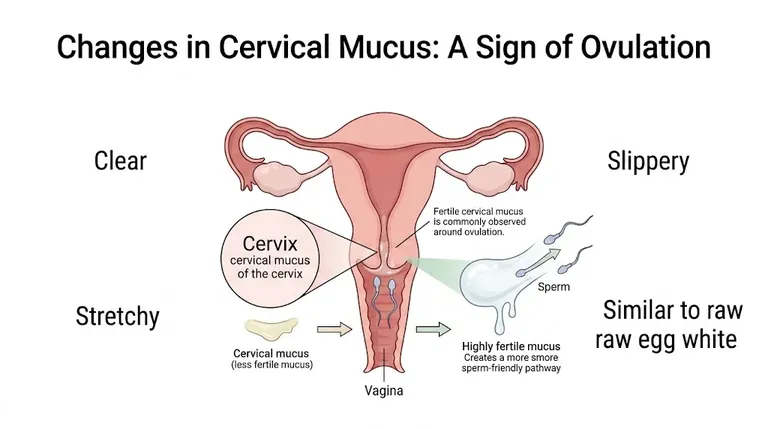
One of the more noticeable signs of approaching ovulation is a change in cervical mucus. This is the natural fluid produced by the cervix, and its texture changes throughout your cycle in response to hormone levels.
As ovulation gets closer, many women notice their mucus becoming clearer, slipperier, and more stretchy, often described as looking similar to raw egg white. This texture tends to show up a few days before ovulation and can stick around until shortly after.
This kind of mucus is thought to help sperm move more easily, which is part of why it’s linked to the most fertile days of the cycle. Our guide to cervical mucus tracking explains how to chart it. Some women find it useful to simply pay attention to how their discharge looks and feels from day to day.
That said, cervical mucus isn’t a perfect science. It can be affected by things like hydration, medications, infections, or hormonal birth control, so it shouldn’t be treated as a guaranteed way to pinpoint ovulation. Like most ovulation signs, it’s best used as one piece of the puzzle, alongside other signs.
Mild One-Sided Pelvic Pain
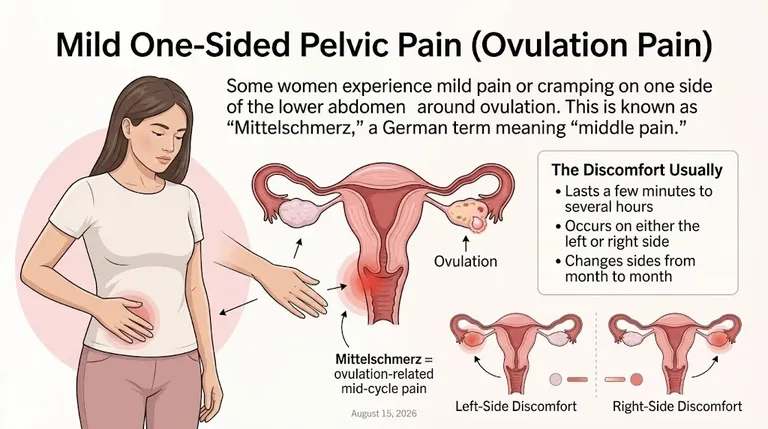
Some women notice a mild, brief ache or twinge on one side of their lower abdomen around the time of ovulation. This is sometimes called “Mittelschmerz,” a German word that simply means “middle pain,” referring to the middle of the cycle.
This discomfort is usually described as mild rather than sharp or severe. It can last anywhere from a few minutes to a few hours, and it may show up on the left side one month and the right side the next, which makes sense, since ovaries tend to alternate which one releases an egg each cycle.
Not every woman experiences this, and that doesn’t mean anything is wrong. Some people are simply more aware of subtle changes in their body than others.
It’s worth being clear here: mild, short-lived pain around the middle of your cycle can be a normal sign of ovulation, but pelvic pain that is severe, persistent, or doesn’t go away shouldn’t automatically be assumed to be ovulation pain. If pain feels intense or out of the ordinary for you, it’s a good idea to check in with a doctor rather than guessing.
Breast Tenderness
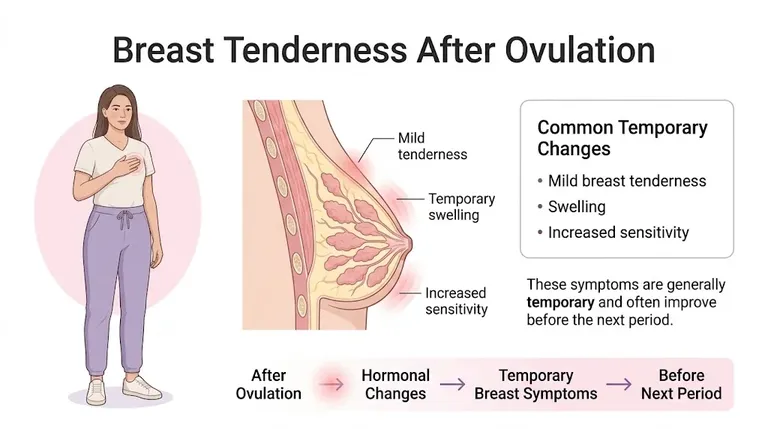
After ovulation, hormone levels, particularly progesterone, begin to rise. This shift can lead to temporary breast tenderness for some women, along with mild swelling or increased sensitivity.
This tends to be a short-term change. Many women notice it easing up before their next period starts, once hormone levels settle back down.
Like the other ovulation signs on this list, breast tenderness can vary a lot from person to person. Some women notice it every cycle, some only occasionally, and others not at all. On its own, breast tenderness can’t confirm that ovulation has happened, it’s simply one possible clue among several.
Temporary Bloating
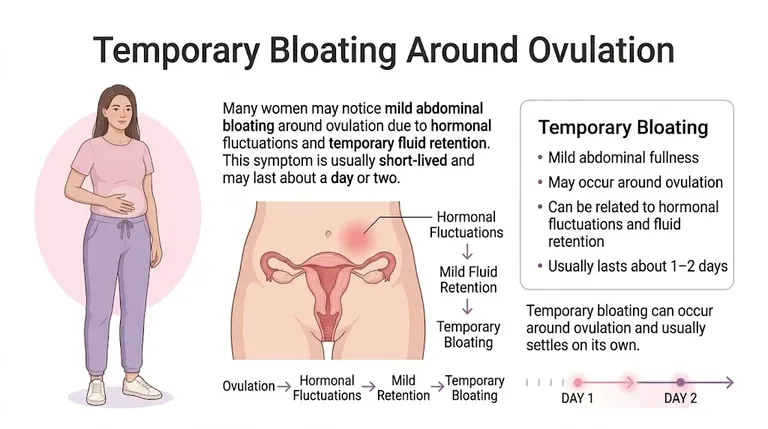
Some women notice their belly feels a little fuller or more swollen around the time they ovulate. This is a fairly common experience, and it’s usually nothing to worry about.
Hormonal changes around ovulation can affect how much fluid your body holds onto, and they may also have a mild effect on digestion for some women. Together, these shifts can lead to that “puffy” feeling. The good news is that this kind of bloating tends to be short-lived, usually easing up within a day or two.
Since bloating can happen for so many other reasons too, it isn’t one of the more reliable ovulation signs to rely on by itself. It’s more helpful as one small clue alongside other signs.
Light Spotting
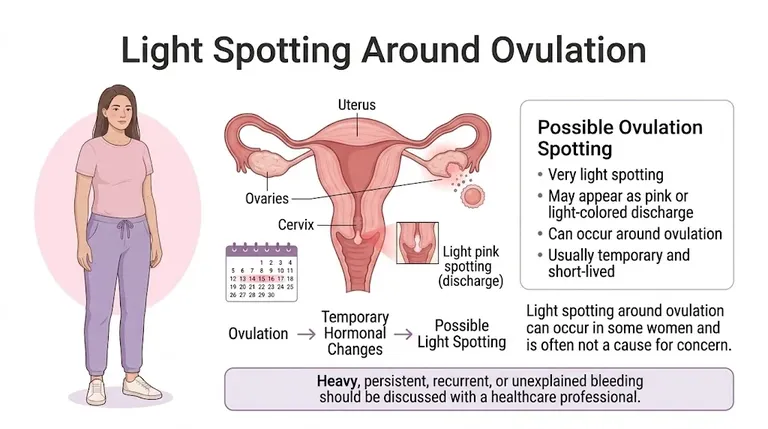
A small number of women notice very light spotting around the middle of their cycle, close to when ovulation happens. It’s usually described as pink or a very light color, and it’s typically much lighter than a period.
This is thought to be linked to the hormonal shift that happens as the egg is released. It’s not something every woman experiences, but for those who do, it tends to be brief.
It’s worth being clear about what this doesn’t include. Light spotting around ovulation (compare ovulation bleeding vs a period) is different from bleeding that is heavy, that keeps happening outside your usual pattern, or that you can’t explain. If you notice bleeding like that, it’s best to have it checked by a healthcare professional rather than assuming it’s related to ovulation.
Changes in the Cervix
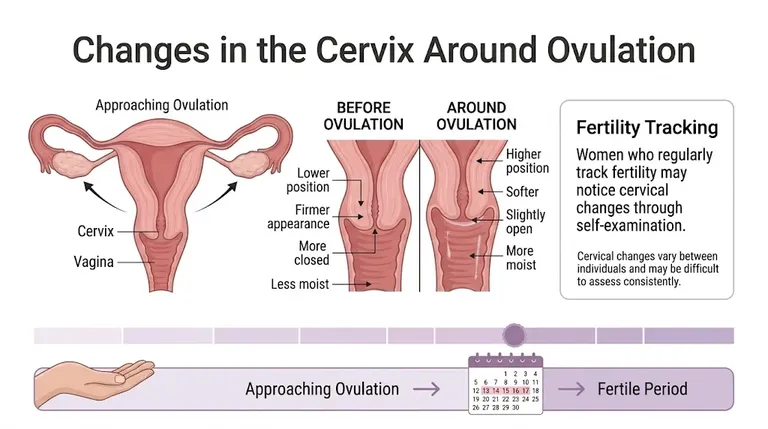
The cervix is the lower part of the uterus, where it opens into the vagina. It’s a small structure, but it actually changes texture and position throughout your cycle in response to hormones, most people just never think to check.
Around the fertile part of the cycle, the cervix may become:
- Softer to the touch
- Positioned a little higher in the vagina
- Slightly more open
- More moist
Some women who practice fertility awareness methods get into the habit of checking these changes regularly, using clean hands to feel for position and texture. Over time, this can help them get a general sense of where they are in their cycle.
That said, this sign takes practice to notice accurately, and it’s more subjective than something like cervical mucus, so it shouldn’t be treated as an exact test for ovulation on its own. If you do choose to check, good hygiene matters, always use clean, washed hands. And if you’re dealing with any pain, unusual discharge, signs of infection, or other medical concerns, it’s best to skip self-examination and speak with a healthcare provider instead.
Increased Sex Drive
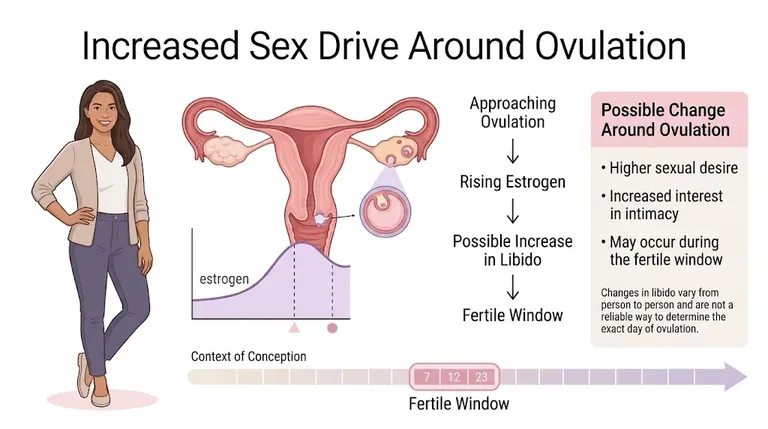
Some women notice a natural rise in sexual desire around the time they ovulate. This is thought to be linked to the rise in estrogen that happens in the days leading up to ovulation.
Like most things on this list, this isn’t universal. Libido is shaped by a lot of factors, stress, sleep, relationships, general health, so it varies a lot from person to person and even from month to month for the same person.
If you do notice this pattern in yourself, it can be an interesting thing to be aware of as one of the subtler ovulation signs. But it’s not something you can use on its own to know exactly when you’re ovulating, pairing it with something like a positive ovulation predictor test gives a much clearer answer.
Sharper Sense of Smell or Taste
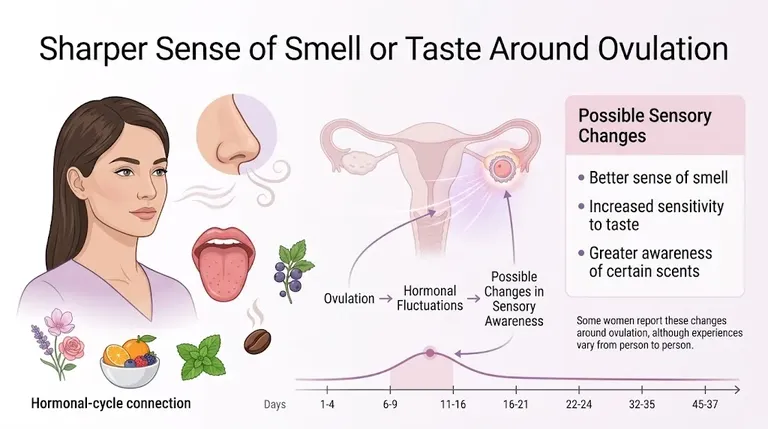
This one surprises a lot of people. Some women report that their sense of smell feels sharper around ovulation, certain scents may seem stronger or more noticeable than usual. A smaller number also notice slight changes in how things taste.
Researchers think hormonal shifts around this time may play a role in these small sensory changes, though this isn’t something every woman experiences or notices.
If you’ve never picked up on this in yourself, that’s completely normal too. Because it’s subtle and hard to measure, it isn’t a symptom you can rely on by itself to identify ovulation.
Mood Changes
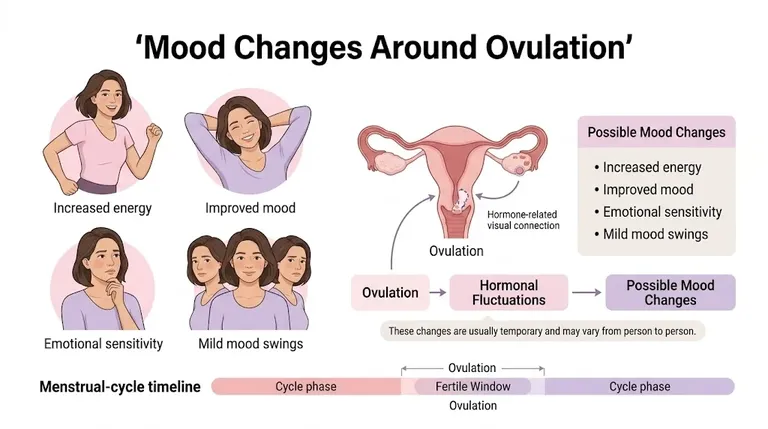
Hormones don’t just affect the body, they can influence how you feel, too. Around ovulation, some women notice a boost in energy or an improved mood. Others notice the opposite: more emotional sensitivity or mild mood swings.
These shifts are usually short-lived and tend to settle down within a day or two.
Mood is affected by so many things in daily life that it’s not a precise way to identify ovulation on its own. But paired with other physical ovulation signs, it can be one more piece of the pattern some women learn to recognize in themselves over time.
Appetite Changes
Hormonal shifts during ovulation can also bring on temporary changes in appetite. Some women notice they feel hungrier than usual, while others get specific cravings around this point in the cycle.
This is thought to be linked to the same hormonal fluctuations, particularly shifts in estrogen and progesterone, that drive many of the other signs on this list. Like bloating and mood changes, it tends to be mild and short-lived.
Appetite naturally fluctuates for all sorts of reasons unrelated to ovulation, so on its own it isn’t a reliable way to identify your fertile window. It’s best noticed alongside other, more specific signs.
What Does Ovulation Feel Like?
For many women, ovulation feels like nothing at all. When it is felt, it is usually described as a dull ache or a quick sharp twinge low on one side of the belly that lasts from a few minutes to a few hours. You may also notice wetter or slippery discharge, slightly tender breasts, mild bloating, or a lift in energy and mood.
These sensations are mild and short-lived. How strongly you feel them varies from cycle to cycle, and not feeling anything does not mean you did not ovulate.
Is Cramping During Ovulation Normal?
Yes, mild cramping at mid-cycle can be normal. It is often called mittelschmerz, German for “middle pain.” It is usually felt on one side, may switch sides from month to month, and typically passes within hours, or occasionally within a day or two, according to the NHS and Cleveland Clinic’s ovulation pain page. It can feel like a dull cramp or a brief sharp pang, and it is different from the longer-lasting period cramps that come with bleeding.
Pain is less likely to be ovulation-related if it is severe, lasts several days, or comes with fever, vomiting, fainting, or heavy bleeding. One-sided pain with a late period or positive pregnancy test needs urgent medical care, because it can signal an ectopic pregnancy.
Secondary Ovulation Symptoms
Secondary symptoms are less specific and may not appear every cycle, or at all. They often show up around ovulation, but they can also have other causes, such as stress, premenstrual changes, or early pregnancy.
- Mild one-sided pelvic pain or cramping
- Light spotting
- Breast tenderness
- Bloating
- Increased sex drive
- Heightened sense of smell, taste, or sight
- Mood changes
- Appetite changes
Treat these as supporting clues. They are most helpful when they appear together with a primary sign.
Pay Attention to Your Ovulation Symptoms
Your own pattern is the most useful information you have. For two to three cycles, note the first day of your period, cervical mucus changes, pain, mood, test results, and temperature. Patterns usually become clear after a few cycles.
You can enter your dates in the ovulation calculator for an estimate, and read our guide to tracking ovulation for the main methods. A calculator is an estimate, so use your symptoms to check it.
Five Ways to Manage Your Ovulation Symptoms
Most ovulation symptoms are mild and need no treatment. These steps can make them easier to live with:
Track Your Cycle
Knowing when symptoms usually appear takes away the surprise and helps you plan around them.
Use Warmth and Rest for Cramping
A warm pad on the lower abdomen and a short rest often help. If you take over-the-counter pain relief, follow the label and ask a pharmacist or doctor if you are unsure.
Ease Bloating With Food and Fluids
Drink water, eat smaller meals, and go easy on very salty foods for a day or two.
Keep Moving and Sleep Well
Gentle exercise and regular sleep help with energy, mood, and general comfort across the cycle.
Plan Around Your Fertile Window
If you are trying to conceive, time sex in the fertile window. If you are avoiding pregnancy, do not rely on symptoms or a calculator; use contraception designed and tested for that purpose.
Which Sign of Ovulation Is Most Accurate?
Signs at a Glance
| Sign | When it shows | What it tells you |
|---|---|---|
| Egg-white cervical mucus | Days before ovulation | Early clue that the fertile window is near |
| Positive LH test (OPK) | Shortly before the egg is released | Helps narrow your most fertile days |
| Rise in basal body temperature | After ovulation | Confirms ovulation already happened |
| Mild one-sided pelvic pain | Around ovulation | Possible sign, but not exact or reliable |
| Breast tenderness, bloating, mood changes | Around or after ovulation | Not specific; can also happen before a period |
| Ultrasound | In a clinic | Most precise; used mainly for fertility care |
Egg-White Cervical Mucus
This tells you that your body’s hormone levels are shifting in a way that’s typical of the fertile window. It’s a helpful early clue that ovulation may be approaching, though it can’t tell you the exact day it will happen.
Positive Ovulation Predictor Kit (LH Surge)
This gets a bit more specific. Since the LH surge usually happens shortly before the egg is released, a positive OPK is often seen as one of the more useful ways to narrow down your most fertile days in real time.
Basal Body Temperature
Basal body temperature (BBT, see our guide to tracking ovulation) works differently from the other methods. Instead of predicting ovulation ahead of time, a sustained rise in temperature generally shows that ovulation has already happened. It’s more useful for confirming ovulation after the fact than for catching your fertile window in advance.
Ultrasound Confirmation
In a medical setting, a doctor can use ultrasound to directly monitor the development of the follicle (the small sac in the ovary where the egg matures) and confirm when ovulation happens. This is the most precise of the four methods, though it’s typically used for fertility treatment or investigation rather than everyday cycle tracking.
How to Predict and Track Ovulation
Combine a few simple methods: record your period dates, watch cervical mucus, take your temperature each morning, and use an ovulation test. Our guide to tracking ovulation gives a step-by-step overview.
Ovulation Home Tests
Home ovulation tests measure luteinizing hormone (LH) in urine. A positive result means the LH surge has started, and ovulation usually follows within about 24 to 48 hours, which makes the test useful for timing sex. Read how ovulation predictor kits work for tips on testing and reading results. Some medicines and conditions such as PCOS can make results harder to read. Mayo Clinic’s pregnancy guide also explains how to time sex around ovulation.
Can You Get Pregnant When You Have Ovulation Symptoms?
Yes, this is generally when fertility is at its highest, which is exactly why so many people pay attention to ovulation signs in the first place.
It helps to understand why the fertile window spans more than just one day. Sperm can survive inside the body for several days under favorable conditions (up to 7 days, according to NHS fertility guidance), so intercourse in the days before ovulation can still lead to pregnancy. Once released, the egg is only fertilizable for a short window afterward, usually somewhere around 12 to 24 hours.
That said, ovulation symptoms are not a precise science. Noticing ovulation signs doesn’t guarantee pregnancy will happen, and not noticing any signs doesn’t mean you’re in the clear either. If you’re hoping to avoid pregnancy, it’s important not to treat symptoms or a calculator estimate as a reliable form of contraception, for that, our Safe Days Calculator explains why calendar-based methods aren’t a guaranteed substitute for tested contraception, and it’s best to talk with a healthcare provider about methods designed and tested for that purpose.
What Conditions and Disorders Can Affect Ovulation?
Ovulation can be delayed, irregular, or absent for several reasons. Common ones include:
- PCOS: often causes infrequent or absent ovulation (see PCOS and ovulation).
- Thyroid disorders: an underactive or overactive thyroid can disrupt the cycle (see the thyroid and the menstrual cycle).
- High prolactin levels, which can suppress ovulation.
- Premature ovarian insufficiency, when the ovaries stop working normally before age 40.
- Stress, very low body weight, or intense exercise, which can switch off the signal that starts ovulation (see how stress affects your period).
- Perimenopause, when ovulation becomes less predictable.
- Hormonal contraception and breastfeeding, which can stop or delay ovulation (see periods while breastfeeding).
If your cycles are irregular, read common causes of menstrual cycle irregularities for more detail.
Do You Still Ovulate on Birth Control?
Most hormonal methods, such as the combined pill, the patch, the ring, and the injection, work mainly by preventing ovulation. Some methods, including the progestin-only pill and some hormonal IUDs, suppress ovulation less consistently. Ask your doctor about your own method.
Can You Ovulate but Not Get Your Period?
Yes. Ovulation can happen without a visible period, for example when pregnancy occurs, or while breastfeeding, when ovulation can return before your first period does. If your periods have stopped and you are not pregnant, see a doctor.
Can Medicine Help You Ovulate?
If you rarely or never ovulate, a doctor may suggest ovulation-inducing medicine after tests to find the cause. These medicines need medical supervision.
When to Talk to Your Doctor About Ovulation Symptoms
Most of the ovulation signs covered in this article are considered a normal part of the cycle. But there are times when it’s worth getting checked out rather than assuming everything is ovulation-related. Consider speaking with a healthcare professional if you notice:
Pelvic pain that is severe or doesn’t go away · Very heavy bleeding, at any point in your cycle · Spotting or bleeding that keeps happening and you can’t explain · Periods that are very irregular, or that stop altogether · Ongoing concerns about your fertility, or no pregnancy after 12 months of trying (6 months if you are 35 or older) · Any symptom that feels unusual or out of character for you.
The Bottom Line
The clearest ovulation clues are egg-white cervical mucus, a positive ovulation test, and a temperature rise afterward. Other symptoms such as mild one-sided pain, breast tenderness, and bloating are supporting clues. Track a few signs together for two to three cycles, and speak to a doctor if your cycles are irregular or you are worried about fertility.