
Spotting vs. Periods: What’s the Difference?
Spotting vs period comes down to flow, color, duration and timing. Spotting is light bleeding outside your normal period, while a period is a steady flow that needs a pad, tampon or cup. This guide explains the key differences, the most common causes and when to see a doctor.
Light bleeding between cycles can look like the start of a period, but the two follow different patterns. Knowing which is which helps you notice possible early pregnancy and decide when to get checked.
To judge what you are seeing, it helps to know what causes menstrual bleeding and to track your menstrual cycle for a few months.
What Is Spotting?
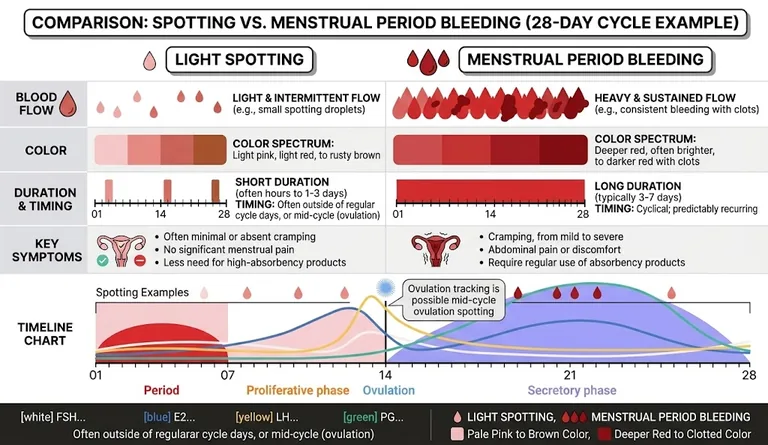
Spotting is light vaginal bleeding that happens outside your regular period. You may see a few drops on underwear or toilet paper, or pink, light red or brown discharge, and the bleeding usually does not get heavier. When it happens between periods it is also called intermenstrual bleeding.
Spotting is common and often harmless, but it is not the same as a menstrual period. The pattern can point to ovulation, early pregnancy, a hormonal change or, less often, a condition that needs treatment.
What Is a Period?
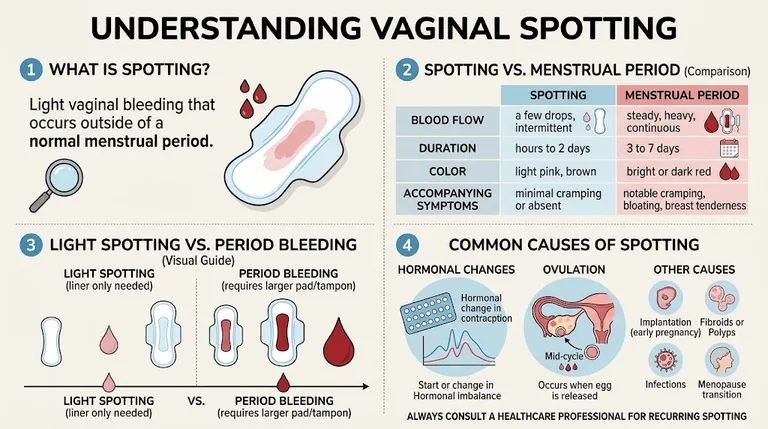
A period, or menstruation and the normal cycle, is the monthly shedding of the uterine lining when pregnancy does not occur. It is a normal part of the cycle phases for most people of reproductive age.
- Heavier flow that needs a pad, tampon or cup.
- Usually lasts 3 to 7 days, often starting lighter, becoming heavier, then lightening again.
- Comes roughly every 21 to 35 days in most adults.
- Often comes with cramps, bloating, breast tenderness or mood changes.
Spotting vs. Periods: Key Differences
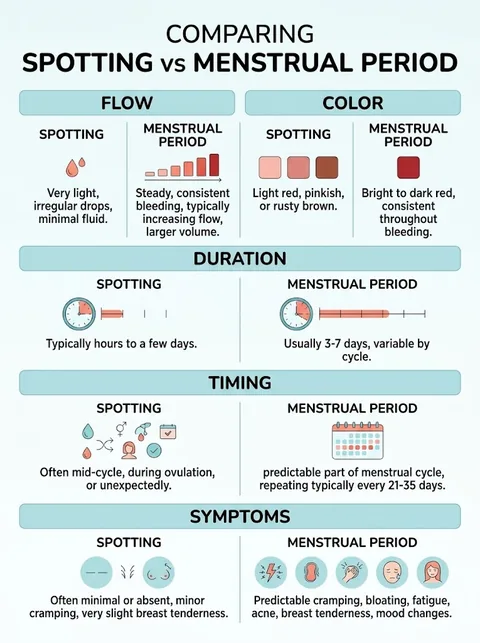
Once you know what to look for, spotting vs period becomes much easier to tell apart. The quick comparison comes first, and each factor is explained below it.
- Flow: Very light, a few drops that may only show on toilet paper or underwear
- Color: Often pink, brown, rust or light red
- Duration: Hours to 1 or 2 days
- Timing: Can happen at any point in the cycle
- Consistency: Thin, may mix with cervical mucus
- Symptoms: Usually none or very mild
- Flow: Moderate to heavy, needs a pad, tampon or cup
- Color: Usually bright red to dark red
- Duration: Typically 3 to 7 days
- Timing: Follows a predictable pattern, often every 21 to 35 days
- Consistency: Thicker, may contain small clots
- Symptoms: Cramps, bloating, breast tenderness, mood changes and fatigue are common
Flow and Blood Volume
Spotting is a few drops, often seen only when you wipe, and it usually does not soak a liner. A period is steady enough to need a pad, tampon or cup. Soaking through protection more often than every 2 hours counts as heavy bleeding, so see our guide to heavy periods if that sounds familiar.
Color of the Blood
Spotting is often pink, light red or brown because the blood is older or mixed with cervical fluid. Period blood is usually red, and brown blood can also show at the very start or end of a period, so judge color together with flow.
Duration of Bleeding
Spotting lasts hours to a day or two and may stop and restart. A period usually lasts 3 to 7 days, and bleeding beyond 8 days is considered abnormal. Periods also tend to build to a peak and then taper.
Timing in the Menstrual Cycle
A period arrives close to the date your cycle length predicts. Spotting can appear mid-cycle, just before a period or after sex. Checking your expected period date makes off-cycle bleeding easier to spot.
Accompanying Symptoms
Periods commonly come with cramps, bloating, breast tenderness, headache or fatigue. Spotting usually brings none or only mild symptoms. Spotting with strong pain, fever or foul-smelling discharge is a different signal and needs medical advice.
Common Causes of Spotting
Most spotting has a simple explanation, but the cause decides what to do next. These are the most common ones.
Ovulation
A brief hormone shift around ovulation can cause light spotting for about a day, sometimes with a mild twinge low in the abdomen. Our guide to ovulation bleeding explains how it differs from a period, and the signs of ovulation help you confirm the timing.
Early Pregnancy and Implantation Bleeding
Implantation bleeding can happen when a fertilized egg attaches to the uterine lining, usually about 6 to 12 days after ovulation. That is often right when a period is due, which is why it gets mistaken for one. It is usually a small amount of light spotting that stops on its own. It is an early sign of pregnancy for some people, but not everyone has it.
- Clots: a period can contain small clots, while implantation bleeding rarely does.
- Color pattern: implantation bleeding tends to stay pink or brown, while period blood often shifts to a deeper red as flow increases.
- Cramping: implantation cramps, if present, are usually mild and brief.
- Duration: implantation bleeding usually lasts one to two days, and a period runs longer.
Because the timing can overlap so closely, the most reliable check is a home pregnancy test after your missed period, or a few days after the bleeding stops.
Birth Control and Hormonal Changes
Pills, patches, rings, implants and IUDs often cause breakthrough bleeding, especially in the first three months. Spotting that starts months after you begin birth control with no earlier spotting is worth mentioning to a doctor. Other hormone triggers include stress, weight changes, intense exercise and breastfeeding. Learn more about how hormone levels shift across the month.
Uterine Fibroids and Polyps
Fibroids and polyps in the uterus are noncancerous growths that can cause bleeding between periods or after a period ends. Spotting that repeats across several cycles, or comes with heavier or longer periods, deserves a check.
Infections and Sexually Transmitted Infections (STIs)
Chlamydia, gonorrhea, pelvic inflammatory disease and vaginal infections can all cause spotting, especially after sex, and some have no other symptoms. STIs are among the causes of bleeding between periods. Spotting with unusual discharge, odor or pelvic pain should be assessed promptly.
Cervical Polyps
Cervical polyps are small growths on the surface of the cervix. They are usually harmless but fragile, so they can bleed after sex or between periods. A clinician can see them during an exam and decide whether they need removal.
Menopause
During perimenopause, shifting hormones can make bleeding irregular, with spotting between periods. Any bleeding after menopause, even a small amount, is never considered normal and always needs evaluation.
Injury or Bleeding After Sex
Rough sex, a Pap smear or vaginal dryness can irritate delicate tissue and cause light bleeding. The NHS also lists cervical ectropion, a change on the cervix surface, as a cause. Bleeding after sex that happens more than once should be checked, and bleeding after an injury or assault needs urgent care.
Other Medical Conditions
Polycystic ovary syndrome (PCOS), thyroid problems, bleeding disorders such as von Willebrand disease, and liver or kidney disease can all cause irregular spotting. Pregnancy complications such as miscarriage or ectopic pregnancy can also start as light bleeding. Gynecologic cancers are a rare cause, which is one reason unexplained bleeding is always worth checking. Here is a useful overview of the possible causes of vaginal bleeding.
Note: Spotting instead of a full period can sometimes signal early pregnancy. Take a pregnancy test if your period is late or much lighter than usual.
What Counts as a True Period Bleed?
A true period bleed is steady enough to need protection, continues for more than a day and fits your usual pattern. Light bleeding before it starts, after it ends or between cycles is logged as spotting instead.
Does Spotting Count as Day 1 of Your Period?
Usually no. Day 1 is the first day of true flow, not the first drop. Light brown or pink spotting that fades without turning into flow is not day 1. If spotting turns into full flow within a day, many people count the day the flow begins. When unsure, note both dates so you can see the pattern later.
When Should You Log a Period vs. Spotting?
- Log a period when you need a pad, tampon or cup, the bleeding continues beyond a day and it fits your usual timing.
- Log spotting when the bleeding is light enough to need no protection, comes and goes, and stops within a day or two.
- Enter only true period start dates in the period calculator, because spotting dates can shift your predictions.
How Long Does Spotting Normally Last?
Most spotting lasts hours to one or two days. Ovulation spotting usually lasts about a day, and implantation bleeding one to two days. Spotting from a new birth control method may come and go for the first few months.
See a doctor if spotting lasts more than a few days or returns across more than one cycle.
How to Track Spotting and Your Menstrual Cycle
Use a period tracker or calendar and note the following each time you bleed:
- The exact dates and how long the bleeding lasted.
- Color and approximate amount, and whether you needed protection.
- Symptoms such as cramps, pain, discharge or fever.
- How it relates to your expected period, ovulation, sex or a change in medication.
Over a few cycles the pattern becomes clearer, and the record is very useful for your doctor. A period calculator can show your usual cycle length, and knowing the signs your period is coming helps you separate early spotting from the real start.
How Are Spotting and Period Problems Diagnosed?
A doctor starts with your symptoms and cycle record, then may recommend:
- A physical and pelvic exam.
- A pregnancy test.
- A Pap smear or swabs to check for infection.
- Blood tests, for example for hormones or thyroid function.
- A pelvic ultrasound to look at the uterus and ovaries.
Once a cause is found, your clinician may adjust your medication or recommend treatment.
Treatment for Spotting and Period Problems
Treatment for Spotting
Treatment depends on the cause. Ovulation and implantation spotting are light, stop on their own and need no treatment. Infections are treated with antibiotics, hormone-related spotting may improve with a change of contraception or hormone therapy, and polyps or fibroids can be removed with surgery when they cause problems.
Treatment for Period Problems
Heavy, painful or irregular periods are also treated by cause. Options can include hormonal medicines, treating conditions such as thyroid disease or PCOS, or procedures for growths. Read more about heavy periods and cramps, and talk to a clinician before starting any medicine.
How to Reduce the Risk of Spotting and Menstrual Irregularities
Not all spotting can be prevented, but these habits may lower the chance of unexpected bleeding:
- Take hormonal contraception exactly as directed and avoid skipping doses.
- Manage stress and keep sleep and meals regular.
- Aim for a steady weight, avoid crash diets and increase exercise gradually.
- Use protection and get tested for STIs, and keep up with routine cervical screening.
- Track your cycle so changes stand out early.
- Follow up on thyroid disease or PCOS with your clinician.
For a wider look at what disturbs cycles, see our guide to menstrual irregularities.
When Should You Call a Doctor?
Most spotting is not serious, but contact a healthcare provider if you notice any of the following:
- Spotting that lasts more than a few days or returns across several cycles.
- Bleeding after sex that happens more than once.
- Any bleeding after menopause.
- Heavy bleeding that soaks a pad or tampon every hour for several hours.
- Spotting with severe pain, fever, foul-smelling discharge or dizziness.
- Bleeding when you are pregnant or may be pregnant, especially with pain, which needs urgent care.
It is always worth getting bleeding between periods or after sex checked. Early evaluation helps rule out infection, hormonal imbalance and other conditions.