
Common Causes of Menstrual Cycle Irregularities
Menstrual cycle irregularities are a common concern for women of all ages. Occasional variation can be normal, but persistent or severe changes may point to an underlying medical condition. This guide explains the common causes of irregular periods, from pregnancy and thyroid problems to PCOS, so you know what to look for and when to get help.
What Are Menstrual Cycle Irregularities?
Irregular cycles are changes in the timing, flow, or duration of your period that go beyond your usual pattern. A normal cycle lasts 21 to 35 days with bleeding for 3 to 7 days (see what counts as a normal menstrual cycle), and the Period Calculator for irregular periods can show how much your own cycle length varies.
Irregular cycles are one of the most common reasons women seek gynecological care; research suggests roughly 14 to 25% of women have an irregular cycle at some point. Occasional variation can be normal, but persistent or severe irregularities can point to an underlying medical condition. For a research overview, see this review of the impact of irregular menstruation on health.
What Is Considered an Irregular Period?
- Periods arriving earlier or later than your usual cycle length
- Missed periods or skipped cycles
- Periods that continue for more than seven days
- Unusually heavy or light bleeding compared with your normal
- Spotting between periods or unexpected bleeding
- Periods with intense pain, cramps, nausea, or vomiting
- No period for three months (90 days) or longer
If your period is simply late, read why your period might be late first.
Normal Changes in the Menstrual Cycle
Cycle length can vary by a few days from one month to the next. Stress, travel, illness, and changes in routine can all shift the timing of a period without signalling a medical problem. A pattern that keeps changing over several months is what deserves attention.
Age-Related Changes
Cycles are often irregular in the first few years after a first period (see our first period guide), tend to settle in the twenties and thirties, and become irregular again in the years before menopause.
The Most Common Causes of Menstrual Cycle Irregularities
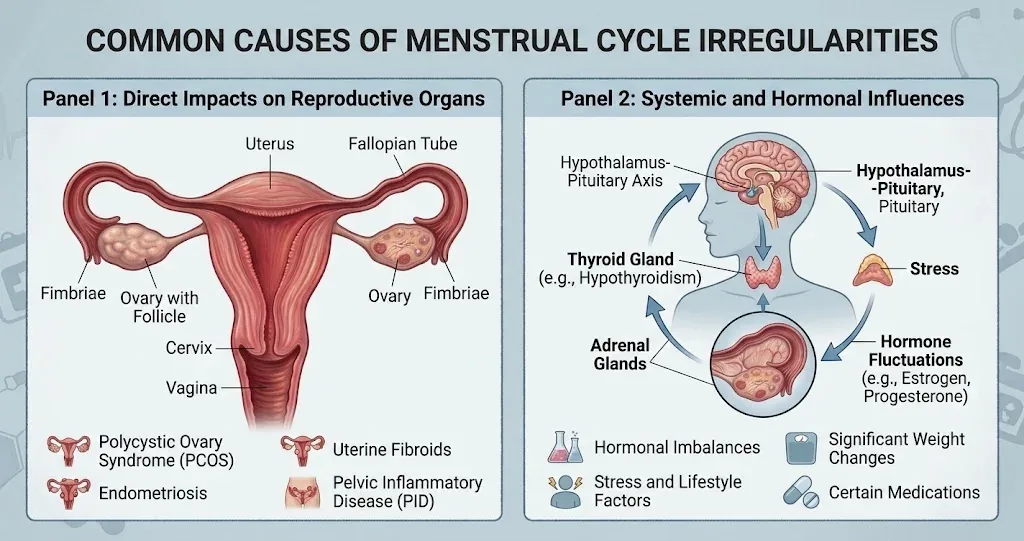
Most irregular periods trace back to a change in the hormones that control ovulation. The sections below cover the usual causes, from hormone problems to everyday lifestyle factors.
Hormonal Imbalances
Your cycle depends on a coordinated rise and fall of estrogen, progesterone, LH, and FSH (see how hormones change during the menstrual cycle). When any of these signals is too high, too low, or mistimed, ovulation can be delayed or skipped and periods become unpredictable.
Polycystic Ovary Syndrome (PCOS)
Polycystic ovary syndrome (PCOS) is a common hormonal disorder characterised by the presence of multiple small cysts in the ovaries. Women with PCOS often experience:
- Irregular or absent ovulation
- Elevated levels of testosterone, causing hormonal imbalance
- Symptoms such as acne, excess hair growth (hirsutism), and weight gain
PCOS is one of the most common underlying causes of cycle irregularities and may affect fertility and the fertile window if left untreated. According to the Office on Women’s Health, about 1 in 10 women with irregular menstrual cycles has PCOS. Medical management, lifestyle modifications, and sometimes medication are essential for regulating cycles and improving reproductive outcomes.
Thyroid Disorders
Your thyroid gland produces hormones that regulate metabolism and play a direct role in your menstrual cycle. Both an underactive thyroid (hypothyroidism) and an overactive thyroid (hyperthyroidism) are among the most commonly cited causes of cycle irregularities.
- Hypothyroidism can cause heavier, more frequent, or prolonged periods
- Hyperthyroidism can cause lighter or less frequent periods
- Other symptoms may include fatigue, unexplained weight changes, or heart palpitations
Our guide to the thyroid and the menstrual cycle explains the link in more detail. A simple blood test can check thyroid hormone levels, and appropriate medication can often restore a regular cycle once the underlying thyroid condition is treated.
High Prolactin Levels
Prolactin is the hormone that supports milk production. Levels that are higher than normal outside pregnancy and breastfeeding can suppress ovulation and cause irregular or missed periods. Possible causes include a small, usually benign pituitary growth (prolactinoma), an underactive thyroid, and some medications. A blood test can measure prolactin.
Insulin Resistance
Insulin resistance means the body needs more insulin than usual to control blood sugar. High insulin can raise androgen (male hormone) levels in the ovaries and interfere with regular ovulation. It is closely linked with PCOS, and a doctor can check for it with blood tests.
Significant Weight Changes
Both rapid weight loss and significant weight gain can change hormone levels and disrupt ovulation. Read more about weight changes and the menstrual cycle.
Lifestyle-Related Causes
Daily habits influence the brain signals that control the ovaries. The factors below are the most common lifestyle triggers, and they often overlap.
Chronic Stress
Long-term stress raises cortisol, which can suppress the signal that starts the cycle and delay or stop ovulation. See how stress affects your period for details.
Lack of Sleep
Poor or irregular sleep, including shift work, has been linked with irregular cycles in observational studies. These studies show an association, not proof of cause, but regular sleep is a sensible first step.
Excessive Physical Activity
Very intense training without enough food to match can lower reproductive hormones and cause missed periods. Moderate exercise usually does not do this. See exercise and the menstrual cycle.
Restrictive Diets
Eating too little, extreme dieting, and eating disorders such as anorexia nervosa or bulimia can switch off ovulation. A body mass index (BMI) below 18.5 increases the likelihood. Insufficient energy intake interferes with LH and FSH, which are needed for estimating ovulation and for a regular cycle.
Other Causes of Abnormal Menstruation
Several conditions of the reproductive organs can also change bleeding patterns. Polyps, adenomyosis, and bleeding disorders are other possible causes, and, rarely, cancer of the uterus or cervix. Poorly controlled diabetes, Cushing’s syndrome, scarring inside the uterus (Asherman’s syndrome) and some medicines, such as certain epilepsy or mental health medicines, can also change your cycle.
Premature Ovarian Failure (POF)
Premature ovarian failure, also known as ovarian insufficiency, occurs when the ovaries lose normal function before age 40. Women with POF may experience:
- Irregular or skipped periods over several years
- Difficulty conceiving naturally
- Early onset of menopause-like symptoms such as hot flashes and low estrogen levels
This condition can significantly impact fertility, and early medical evaluation is recommended for diagnosis and management.
Pelvic Inflammatory Disease (PID)
Pelvic Inflammatory Disease (PID) is an infection of the female reproductive organs, commonly caused by sexually transmitted bacteria. If untreated, PID can damage the fallopian tubes and uterus, leading to chronic pain and infertility.
Common symptoms of PID include:
- Bleeding between periods or after sexual intercourse
- Pelvic or lower abdominal pain
- Unusual vaginal discharge
Early diagnosis and antibiotic treatment are critical to prevent long-term complications and preserve reproductive health.
Uterine Fibroids
Fibroids are noncancerous tumours that develop in the wall of the uterus. They vary in size, from as small as an apple seed to as large as a grapefruit. Fibroids can disrupt menstrual cycles and cause:
- Heavy menstrual bleeding, potentially leading to anemia
- Pain during intercourse
- Pelvic pressure or discomfort
Fibroids are common in women of reproductive age and are one of several structural causes of cycle irregularities, often requiring medical or surgical intervention depending on severity and symptoms.
Endometriosis
Endometriosis occurs when tissue similar to the uterine lining grows outside the uterus, often on the ovaries or fallopian tubes. It’s a recognized cause of cycle irregularities and can involve:
- Abnormal or unpredictable bleeding patterns
- Severe cramping or pelvic pain before and during periods
- Pain during intercourse or bowel movements
Endometriosis can be difficult to diagnose since symptoms overlap with other conditions on this list. If period pain feels disproportionate to what’s typical for you, it’s worth raising with a doctor specifically.
Types of Menstrual Cycle Disorders
Doctors use specific clinical terms for different patterns. Knowing them helps you describe your symptoms precisely.
| Term | What It Means |
|---|---|
| Amenorrhea | Absence of periods for 90 days (3 months) or longer |
| Oligomenorrhea | Infrequent periods, with cycles longer than 35 days apart |
| Polymenorrhea | Frequent periods, with cycles shorter than 21 days apart |
| Menorrhagia | Regularly timed periods with unusually heavy or prolonged bleeding (over 7 days) |
| Metrorrhagia | Irregular bleeding between periods, at unpredictable times |
| Hypomenorrhea | Regularly timed periods with unusually light bleeding |
| Dysmenorrhea | Painful periods, often with cramping |
Doctors also use the umbrella term abnormal uterine bleeding for bleeding that is heavier, longer, or more frequent than normal. These terms overlap with the causes above: PCOS is commonly linked with oligomenorrhea, while fibroids more often cause menorrhagia (see heavy periods and menorrhagia).
Can Medications and Birth Control Affect Menstrual Cycle Regularity?
Yes. Starting, stopping, or switching hormonal contraception is one of the most common and often overlooked causes of irregular periods. This includes the combined pill, progestin-only pill, hormonal IUD, implant, patch, and injection.
- Breakthrough spotting is common in the first few months on a new method
- Hormonal IUDs and the implant can cause irregular bleeding or lighter periods for an extended period
- Cycles typically take a few months to settle after stopping hormonal contraception
- Emergency contraception can move your next period earlier or later
Some other medicines can also affect your cycle. Certain antidepressants and antipsychotics can raise prolactin, blood thinners can cause heavier bleeding, and cancer treatments can stop periods. Do not stop a prescribed medicine without speaking to your doctor. Persistent irregular bleeding beyond the first few months on a new method is worth mentioning at a follow-up appointment.
Can Irregular Periods Be a Sign of Pregnancy?
Yes. A missed or delayed period is often one of the earliest signs of pregnancy. If your cycle changes after unprotected sex, take a pregnancy test. Light spotting can also occur in early pregnancy.
During breastfeeding, prolactin suppresses reproductive hormones such as estrogen and progesterone, which can cause lighter periods or a temporary absence of menstruation (amenorrhea). Periods may return before you notice a first ovulation, so see our guide to periods while breastfeeding.
Do Irregular Periods Affect Fertility?
Irregular cycles often mean ovulation is irregular or not happening every month, which makes timing sex harder and can delay pregnancy. Many women with irregular periods still conceive, and treating the cause often helps. If you have been trying for 12 months (or 6 months if you are over 35), or you have very infrequent periods, speak to a doctor sooner. Our guide to estimating ovulation with irregular periods explains what you can track meanwhile.
Causes of Irregular Cycles by Age
Irregular Periods During Puberty
In the first two to three years after a first period, the brain and ovaries are still learning to work together, so ovulation is often irregular. Long gaps are common and usually not a concern, but very heavy bleeding or no first period by age 15 should be checked.
Irregular Periods During the Reproductive Years
In the twenties to forties, irregular periods more often have an identifiable cause: pregnancy, breastfeeding, contraception, PCOS, thyroid disease, stress, or weight change. Any of the causes above can apply.
Menstrual Irregularities Before Menopause
In perimenopause, usually the late forties, ovulation becomes less predictable. Cycles may get shorter, then longer, with skipped periods and hot flushes. Periods that stop before age 40 may be premature ovarian insufficiency and should be assessed.
Warning Signs You Should Not Ignore
Get medical advice promptly if you notice any of these:
- Bleeding that soaks through more than one pad or tampon every hour for several hours
- Severe pelvic pain, or pain with fever or unusual discharge
- Pain on one side with bleeding or a positive pregnancy test, which can signal an ectopic pregnancy and needs urgent care
- Bleeding after menopause or after sex
- Dizziness, fainting, or extreme tiredness with heavy bleeding, which can mean anemia
Missed periods can also come with other signs worth mentioning to a doctor, such as milky nipple discharge, hot flashes, vaginal dryness, hair loss, headaches, vision changes, excess facial hair, acne or pelvic pain. Untreated heavy bleeding can lead to anemia, and years without periods can lower estrogen enough to affect bone health. In women in their forties and older, persistent heavy or unusual bleeding should be checked, because conditions such as endometrial hyperplasia or, rarely, uterine cancer can be responsible.
How Do Doctors Determine the Cause of Irregular Periods?
A doctor usually starts by ruling out pregnancy, then works through your history and a few tests.
Medical History and Menstrual Cycle Tracking
Expect questions about your cycle length, flow, pain, medicines, weight changes, stress, and family history. A few months of tracked dates make this much easier, and a period calculator can help you record them.
Hormone Tests
Blood tests may measure FSH, LH, estradiol, prolactin, and androgens such as testosterone to look for PCOS, ovarian insufficiency, or high prolactin.
Thyroid Function Tests
A blood test for thyroid-stimulating hormone (TSH), sometimes with thyroid hormone levels, shows whether an underactive or overactive thyroid is involved.
Ultrasound
A pelvic ultrasound looks at the uterus and ovaries and can show fibroids, polyps, or ovarian cysts.
How Are Irregular Periods Treated?
Treatment depends on the cause, your age, and whether you want to become pregnant.
Management and Treatment Options
- Hormonal contraception or progestin therapy to regulate bleeding
- Thyroid medicine for thyroid disorders
- Medicine to lower prolactin when levels are high
- Lifestyle measures and, for PCOS, medicines that address ovulation or insulin resistance
- Iron and anti-bleeding medicines, such as tranexamic acid, for heavy periods
- Pain relievers for cramps, and antibiotics when an infection such as PID is the cause
- Hormone therapy or GnRH agonists for some conditions, such as fibroids or endometriosis, as advised by your doctor
- Gaining weight, adjusting training, or eating disorder treatment when these are the cause
Many people need only reassurance and tracking. Your doctor will explain which option suits you.
When Is Surgery Necessary for Menstrual Irregularities?
Surgery is usually considered only when medicines do not work or a structural problem is found, such as fibroids, polyps, or endometriosis. Common options include:
- Endometrial ablation: removes or destroys the uterine lining to reduce heavy bleeding, and is not suitable if you want a future pregnancy
- Myomectomy: removes fibroids while keeping the uterus
- Uterine artery embolization: blocks the blood supply to fibroids so they shrink
- Hysterectomy: removes the uterus and is a last resort for severe cases
What Can You Do to Track Your Menstrual Cycle?
Tracking gives you and your doctor a clear picture. Use the Period Calculator or a notes app, and aim to keep records for at least three cycles.
Record Your Period Dates
Write down the first day of each period. The number of days from one first day to the next is your cycle length.
Track Bleeding Duration and Flow
Note how many days you bleed, how heavy it is (pads or tampons used), clots, and spotting between periods.
Monitor Associated Symptoms
Record pain, mood changes, headaches, acne, hair growth, and sleep. Patterns often point toward a cause.
The Relationship Between PCOS and Menstrual Cycle Irregularities
PCOS is one of the most common reasons for irregular or missing periods. Ovulation happens rarely or not at all, so the uterine lining builds up without regular shedding. If you suspect PCOS, a doctor can confirm it with blood tests and an ultrasound. Read PCOS and ovulation and PCOS and period calculators for what to expect when predicting your cycle.
When Should You See a Gynecologist?
Some irregularities are temporary, but consult a gynecologist if you experience:
- Sudden changes in cycle regularity
- Severe menstrual pain that disrupts daily life
- Missed periods for three months or more without pregnancy
- Cycles shorter than 21 days or longer than 35 days
- Excessive bleeding requiring more than one pad or tampon per hour
- Spotting or bleeding between periods (compare spotting vs a period)
For more guidance, see the NHS advice on missed or late periods and the Cleveland Clinic overview of abnormal menstruation. Our article on what counts as a late period helps you judge how late is late.
Understanding the Cause Is the First Step Toward Appropriate Care
Irregular periods are a symptom, not a diagnosis. Tracking your cycle, noting your symptoms, and speaking to a doctor early lets you find the cause and choose the right treatment. Start with the Period Calculator to see your pattern.
Frequently Asked Questions
A few more common questions about cycle irregularities, answered briefly.